
What Is the Material Chemistry of Cement? How Do Blended Cements Support Climate Innovation?
Cement is one of the most widely used construction materials in the world, yet the chemistry behind it often goes unnoticed outside scientific and industrial circles. Every building, bridge, and road built with concrete relies on a series of carefully controlled chemical reactions that transform raw minerals into a strong, durable binding material. Understanding the material chemistry of cement helps explain why it performs the way it does and why improving its chemistry is central to making the construction sector more sustainable.
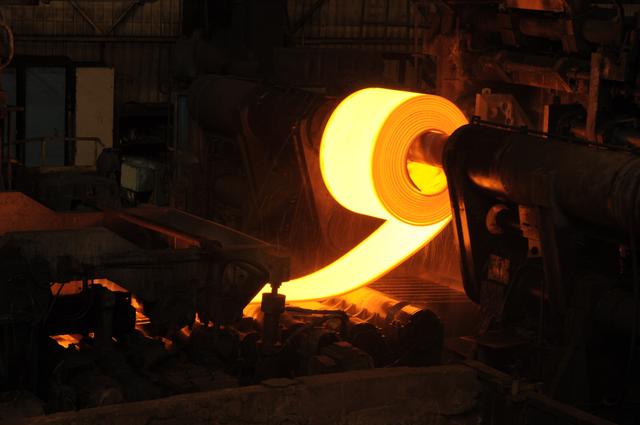
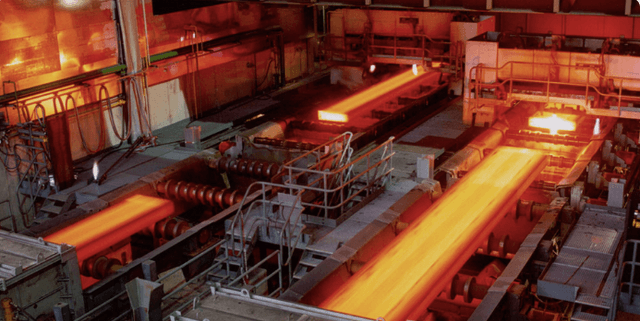
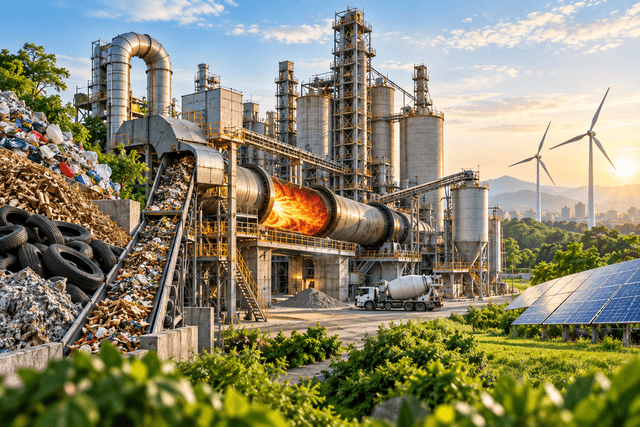
The chemistry of cement begins with the raw materials used to produce it. The primary ingredient is limestone, which provides calcium carbonate, along with smaller quantities of clay, shale, or sand that supply silica, alumina, and iron. These materials are crushed, blended, and fed into a rotary kiln where they are heated to extremely high temperatures, typically around 1400–1450°C.
| Raw Material | Main Chemical Component | Role in Cement Chemistry |
| Limestone | Calcium carbonate (CaCO₃) | Provides calcium for clinker formation |
| Clay | Silica (SiO₂) | Forms silicate minerals |
| Shale | Alumina (Al₂O₃) | Forms aluminate phases |
| Sand | Silica | Adjusts chemical composition |
| Iron ore | Iron oxide (Fe₂O₃) | Helps clinker formation |
Table 1: Raw Materials in Cement Production
At these temperatures, several chemical reactions take place. The first major reaction is calcination, where calcium carbonate from limestone decomposes into calcium oxide (lime) and carbon dioxide. This reaction is fundamental to cement production but also responsible for a large share of the industry’s carbon emissions.
Once calcination occurs, the lime reacts with silica, alumina, and iron oxide present in the raw mix. These reactions form a new material called clinker, which consists of several crystalline mineral phases that determine how cement behaves when mixed with water. Clinker is the chemical backbone of cement. It contains four main compounds, each playing a different role in the performance of cement and concrete. The most important phase is tricalcium silicate (C₃S). This compound reacts rapidly with water and is responsible for early strength development in cement. When concrete gains strength within the first few days after pouring, it is largely due to the hydration of this compound. Another significant phase is dicalcium silicate (C₂S). Unlike tricalcium silicate, it reacts more slowly with water. However, it contributes to the long-term strength and durability of concrete, often improving performance over months or even years. The third compound, tricalcium aluminate (C₃A), reacts very quickly with water and can cause rapid setting if not controlled. To manage this reaction, gypsum is added during the grinding stage of cement production. Gypsum regulates the hydration process, ensuring that cement remains workable long enough for construction activities. Finally, tetracalcium aluminoferrite (C₄AF) contributes less to strength but plays a role in the manufacturing process by lowering the temperature required to form clinker.
Together, these compounds form the chemical structure that gives cement its binding properties.
The real transformation occurs when cement is mixed with water. This process, known as hydration, triggers a series of chemical reactions that gradually turn a fluid mixture into a solid, stone-like material. During hydration, tricalcium silicate and dicalcium silicate react with water to form calcium silicate hydrate (C–S–H) and calcium hydroxide. Among these, calcium silicate hydrate is the most important product. It forms a gel-like structure that binds sand and aggregates together, giving concrete its strength and durability. As hydration continues, microscopic crystals grow and fill the spaces between particles, gradually densifying the material. This is why concrete continues to gain strength over time rather than hardening instantly. The chemistry of hydration also explains many practical aspects of concrete behaviour, including setting time, heat generation during curing, and long-term durability.
Raw Materials
(Limestone + Clay + Sand)
│
▼
Crushing & Blending
│
▼
Rotary Kiln
(1400–1450°C heat)
│
▼
Chemical Reactions
→ Calcination
→ Clinker Formation
│
▼
Clinker
│
▼
Grinding + Gypsum
│
▼
Cement
Figure 1: Cement manufacturing chemistry
Blended Cements and Chemical Innovation
In recent decades, the chemistry of cement has evolved as researchers and industries attempt to reduce its environmental footprint. One of the most significant developments has been the use of supplementary cementitious materials (SCMs) such as fly ash, blast furnace slag, and calcined clays. These materials participate in additional chemical reactions known as pozzolanic reactions, where silica-rich materials react with calcium hydroxide produced during hydration. This reaction forms additional calcium silicate hydrate, further strengthening the concrete while reducing the need for clinker. By partially replacing clinker with these materials, cement manufacturers can reduce both carbon emissions and energy consumption without compromising performance.
| Cement Type | Full Name | Main Blending Material | Typical Clinker Content | Key Characteristics | Sustainability Benefit |
| PPC | Portland Pozzolana Cement | Fly ash | 65–75% | Good long-term strength, improved durability | Reduces clinker use and utilises industrial waste |
| PSC | Portland Slag Cement | Ground granulated blast furnace slag (GGBS) | 40–60% | Excellent durability, good resistance to sulphates and chlorides | Lower CO₂ footprint due to high slag content |
| PLC | Portland Limestone Cement | Limestone | 80–90% | Similar performance to OPC with lower clinker | Reduces emissions with minor formulation change |
| LC3 | Limestone Calcined Clay Cement | Calcined clay + limestone | 45–55% | Comparable strength to OPC, improved durability | Up to ~40% emission reduction |
| Composite Cement | Multi-blended cement | Fly ash + slag | 50–65% | Balanced strength and durability | Higher clinker substitution |
| Geopolymer Cement | Alkali-activated binder | Fly ash / slag | 0–10% clinker | High chemical resistance and durability | Very low CO₂ emissions |
Table 2: Types of blended cements
| Property | OPC | PPC | PSC | LC3 |
| Early strength | High | Moderate | Moderate | Moderate |
| Long-term strength | Good | High | High | High |
| Durability | Moderate | High | Very high | High |
| Heat of hydration | High | Lower | Low | Lower |
| CO₂ intensity | Highest | Lower | Much lower | Much lower |
Table 3: Properties of types of cements
Material chemistry is now at the centre of efforts to decarbonize the cement industry. Scientists are exploring new formulations such as belite-rich cements, limestone calcined clay cement (LC3), and carbon-cured concrete, all of which rely on modifying the chemical composition of cement to lower emissions. Advances in chemistry are also helping improve durability, allowing structures to last longer and reducing the need for frequent reconstruction. In this sense, better chemistry not only lowers emissions during production but also enhances the sustainability of the entire construction lifecycle.
Cement may appear simple a grey powder mixed with water, but its performance is rooted in complex chemical processes that begin in the kiln and continue throughout the life of a concrete structure. From the formation of clinker minerals to the hydration reactions that create strength, chemistry is the invisible engine that makes cement work.
As the world looks for ways to build more sustainably, understanding and improving the material chemistry of cement will play a crucial role in shaping the future of construction.
Cement Emissions and the Role of Blended Cements in Reducing GEI
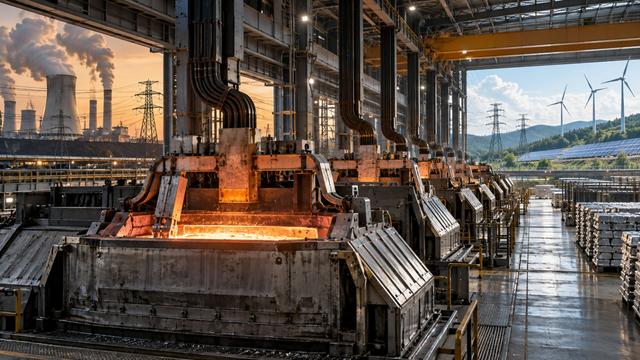
Cement production is one of the most carbon-intensive industrial processes in the world. The sector contributes around 7–8% of global greenhouse gas emissions, mainly due to the production of clinker, the key binding component in cement. Most emissions arise from two sources. First, process emissions occur when limestone (CaCO₃) is heated in a kiln and decomposes into lime (CaO), releasing CO₂. Second, fuel combustion emissions result from burning coal, petcoke, or other fuels to generate temperatures above 1400–1450°C in the kiln. Together, these processes create a significant Greenhouse Gas Emission Intensity (GEI), typically measured as tonnes of CO₂ per tonne of cement.
One of the most effective ways to reduce emissions in cement production is by lowering the clinker content in cement through the use of blended cements. Blended cements partially replace clinker with supplementary cementitious materials (SCMs) such as fly ash, slag, calcined clay, or limestone. Since these materials require little or no additional calcination, they significantly reduce the overall carbon intensity of cement while maintaining performance and durability. As a result, blended cements are considered a key near-term decarbonisation strategy for the cement industry.
| Cement Type | Major Blend Material | Typical Clinker Factor | Average GEI (tCO₂/t cement) |
| Ordinary Portland Cement (OPC) | None | 0.90–0.95 | 0.85–0.95 |
| Portland Pozzolana Cement (PPC) | Fly Ash | 0.65–0.75 | 0.60–0.75 |
| Portland Slag Cement (PSC) | Ground Granulated Blast Furnace Slag | 0.50–0.65 | 0.45–0.65 |
| LC3 (Limestone Calcined Clay Cement) | Calcined Clay + Limestone | 0.45–0.50 | 0.40–0.55 |
| Composite Cement | Fly Ash + Slag | 0.50–0.65 | 0.45–0.60 |
By increasing the share of blended cements, the cement industry can significantly reduce GEI without major technological disruption, making it one of the most practical climate solutions available today.