
How is steel made? What are the emission implications of steel?
Steel is one of the most important materials used in modern society. It forms the backbone of infrastructure, transportation, energy systems, and manufacturing. From bridges and buildings to automobiles and wind turbines, steel enables the development of durable and large-scale structures. Despite its widespread use, the process of producing steel involves a complex sequence of chemical reactions and industrial operations that transform raw minerals into a versatile metal alloy.
Understanding the steelmaking process provides insight into how steel is produced, why the industry is energy-intensive, and where opportunities exist for improving efficiency and reducing emissions.
Raw materials used in Steel Production
Steel production begins with a combination of iron-bearing minerals and carbon-based fuels. These materials are used to extract iron from ore and convert it into steel with specific mechanical properties.
| Raw Material | Main Component | Role in Steelmaking |
| Iron ore | Iron oxides (Fe₂O₃ / Fe₃O₄) | Primary source of iron |
| Coking coal | Carbon | Converted into coke for fuel and reduction |
| Limestone | Calcium carbonate (CaCO₃) | Removes impurities during smelting |
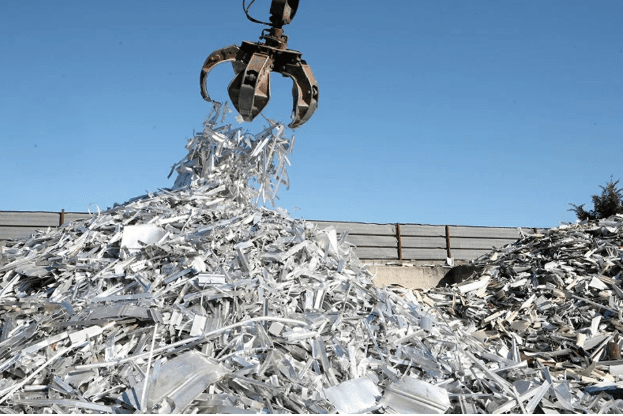
| Scrap steel | Recycled steel | Used as feedstock in electric furnaces |
Major steelmaking routes
Globally, steel is produced through two primary routes. The BF–BOF route is traditionally used for large-scale primary steel production, while EAFs are commonly used for recycling scrap steel.
| Production Route | Description | Share of Global Production |
| Blast Furnace – Basic Oxygen Furnace (BF–BOF) | Produces steel from iron ore using coke | ~70% |
| Electric Arc Furnace (EAF) | Produces steel mainly from recycled scrap | ~30% |
The Blast Furnace Steelmaking Route
The blast furnace route is the most widely used method for producing steel from iron ore. It involves several stages that gradually convert raw materials into molten iron and eventually steel.
Step 1: Iron Ore Preparation
Iron ore is mined and processed to improve its iron content before being used in steelmaking. Typical preparation steps include:
- Crushing and grinding to reduce particle size
- Beneficiation to remove impurities
- Agglomeration (sintering or pelletisation) to prepare ore for the blast furnace
These steps improve the efficiency of the ironmaking process.
Step 2: Ironmaking in the Blast Furnace(BF)
The blast furnace is a large vertical reactor where iron ore is chemically reduced to produce molten iron (hot metal).
Inside the furnace, layers of iron ore, coke, and limestone are continuously fed from the top, while hot air is blown in from the bottom.
Blast Furnace Reactions
| Reaction | Description |
| C + O₂ → CO₂ | Coke burns to generate heat |
| CO₂ + C → 2CO | Formation of carbon monoxide |
| Fe₂O₃ + 3CO → 2Fe + 3CO₂ | Reduction of iron ore to iron |
Carbon monoxide acts as the reducing agent, removing oxygen from iron ore to produce metallic iron.
Step 3: Steelmaking in the Basic Oxygen Furnace(BOF)
Molten iron produced in the blast furnace contains high amounts of carbon and impurities. To convert it into steel, the carbon content must be reduced. In the Basic Oxygen Furnace (BOF), pure oxygen is blown into the molten iron. These oxidation reactions refine the metal and convert it into liquid steel.
BOF Reactions
| Reaction | Purpose |
| C + O₂ → CO / CO₂ | Reduces carbon content |
| Si + O₂ → SiO₂ | Removes silicon |
| P + O₂ → P₂O₅ | Removes phosphorus |
Step 4: Secondary Steel Refining
Before casting, the molten steel undergoes additional refining steps to achieve specific chemical compositions and quality standards. These may include:
| Process | Purpose |
| Ladle refining | Adjust chemical composition |
| Vacuum degassing | Remove dissolved gases |
| Alloying | Add elements like chromium, nickel, manganese |
This stage allows steel producers to create specialised grades of steel for different applications.
Step 5: Casting and Shaping
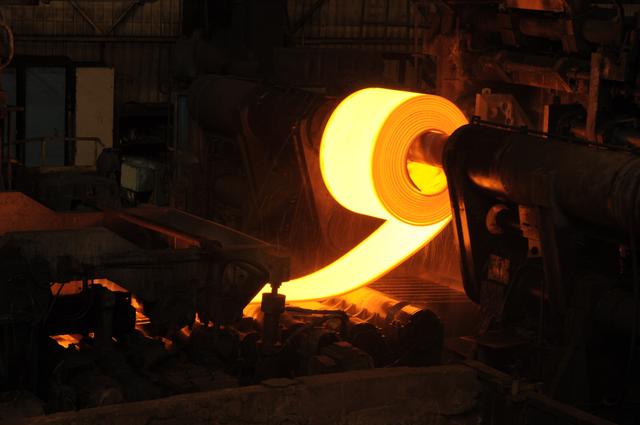
Once refined, molten steel is converted into solid shapes through continuous casting. These semi-finished products are then processed through rolling mills to produce final steel products.
Final Steel Products
Steel products vary depending on the rolling and finishing processes used.
| Product Type | Common Uses |
| Hot rolled coils | Construction and heavy machinery |
| Steel plates | Shipbuilding and infrastructure |
| Rebars | Reinforcement in concrete |
| Structural sections | Bridges and buildings |
| Automotive steel | Vehicle manufacturing |
Table: Final steel products
The steelmaking process transforms raw minerals into one of the most essential materials used in modern society. From the reduction of iron ore in blast furnaces to refining and casting molten steel, the process involves a carefully controlled sequence of chemical reactions, thermal processes, and mechanical operations.
Understanding how steel is produced is crucial not only for appreciating the complexity of modern industry but also for identifying opportunities to improve efficiency and reduce environmental impact. As technologies such as electric arc furnaces, hydrogen-based reduction, and carbon capture develop, the steel industry is gradually moving toward a future of more sustainable and low-carbon steel production.
Steel and Emissions
The main reason steel production generates emissions lies in the chemical process used to extract iron from iron ore. Iron ore typically exists as iron oxide (Fe₂O₃ or Fe₃O₄). To convert it into pure iron, the oxygen must be removed. In traditional steelmaking, this is done using carbon in the form of coke, which reacts with oxygen in the ore.
A simplified reaction is:
Fe₂O₃ + 3CO → 2Fe + 3CO₂
This reaction releases carbon dioxide as a direct by-product. Unlike many other industrial emissions that come from energy use, these emissions are process emissions, meaning they occur due to the chemistry of steelmaking itself.
In integrated steel plants using the blast furnace–basic oxygen furnace (BF-BOF) route, these process emissions form the largest share of total emissions.
Emission Implications of Steel
Carbon footprint of steel is around 1.4 tCO2e per produced ton of steel according to IEA, and and 1.85 tCO2e per ton steel according to Mckinsey and the World Steel Association. This is a weighted average between the two main production methods for steel in the world. The Blast Furnace-Basic Oxygen Furnace (BF-BOF) route and the Electric Arc Furnace route (EAF) which uses 105% recycled steel - often referred to as the 'primary' and 'secondary' paths. CO2 footprint of these two methods are 1.987 and 0.357 tonnes of CO2 per tonne of steel produced respectively. Up to 1.787 tonnes of CO2 is saved per tonne of recycled steel used. The impact of transport on the carbon footprint of steel is estimated at 7.9 grams per tonne-km.
In Indian context, the steel sector accounts for about 12% of India’s carbon dioxide (CO2) emissions, with an emission intensity of 2.55 tonne of CO2/tonne of crude steel (tCO2/tcs) compared with the global average emission intensity of 1.85 tCO2/tcs. The steel industry is responsible for around 240 million tonnes of CO2 emissions annually and we expect this to double at an exponential rate by 2030, considering the Indian government’s infrastructure development targets.
India’s GHG trajectory
India is the world’s second-largest steel producer, and its demand for steel is expected to continue growing as infrastructure, housing, and manufacturing expand. However, this growth also comes with a climate challenge. Steel production in India relies heavily on coal-based technologies, which contribute significantly to industrial emissions.
As the country moves toward its net-zero target for 2070, the steel sector will need to undergo a major technological transformation. A combination of cleaner production routes, green hydrogen adoption, and supportive policy frameworks is expected to shape this transition over the coming decades.
The transition phase: Now to 2030
In the near term, the steel industry is expected to begin gradually reducing its reliance on coal-intensive production routes. In 2021, approximately 92% of India’s steel production relied on coal-based technologies such as blast furnace–basic oxygen furnace (BF-BOF) and coal-based Electric Arc Furnace (EAF) or Electric Induction Furnace (EIF) systems.
By 2030, this share could decline to around 70%, largely due to the introduction of cleaner alternatives. One of the most promising options is the use of green hydrogen as a reducing agent in steelmaking.
India has already started experimenting with this technology. Several pilot projects and demonstration trials for green hydrogen in steel production began around 2020, marking the early stages of technological adoption. If these pilots prove successful, the country could begin commercial-scale green hydrogen production by the end of this decade, enabling the first wave of low-emission steelmaking.
Scaling Up Clean Steel: 2030–2050
The period between 2030 and 2050 is likely to be the most transformative for India’s steel sector. As demand for cleaner industrial processes increases and hydrogen production expands, green hydrogen projects are expected to be deployed at a much larger scale.
During this phase, coal-intensive production routes such as BF-BOF and DRI-EAF systems powered by fossil fuels are expected to gradually decline. According to estimates by IEEFA and JMK Research, the steel industry could replace 25–30% of its current grey hydrogen consumption with green hydrogen in the initial stages.
By 2050, this share could rise dramatically, reaching around 80% substitution, significantly lowering the carbon footprint of steel production.
Towards Near-Zero Emissions: 2050–2070
Looking further ahead, the period between 2050 and 2070 could mark the full maturity of hydrogen-based steelmaking in India. By this time, large-scale hydrogen-based steel plants are expected to be operational across the country.
Two key factors will drive this transition:
- Falling costs of green hydrogen as production scales up
- Greater market competition and technological improvements
As these conditions evolve, green hydrogen-based processes may completely replace conventional coal and natural gas-based technologies, enabling the steel sector to move much closer to near-zero emissions.
Financing the Transition
The shift to low-emission steelmaking will require substantial financial investments, particularly for smaller producers. As new technologies become commercially viable, the sector is likely to see increased financial support, especially for Micro, Small and Medium Enterprises (MSMEs) that dominate parts of India’s steel production landscape.
Financial instruments supporting this transition could include:
- Sustainability-linked bonds (SLBs)
- Sustainability-linked loans (SLLs)
- Blended finance mechanisms
- Sector-specific government schemes and incentives
These funding mechanisms can help steel producers manage the high upfront capital costs associated with new technologies.
The Policy Challenge: Defining “Green Steel”
While technological innovation is essential, policy clarity will be equally important for the sector’s transition. Every industrial transformation brings both opportunities and challenges, and the steel industry is no exception. Technical barriers, high costs, and infrastructure requirements remain significant hurdles.
To accelerate decarbonisation, policymakers will need to introduce clear regulatory frameworks and incentives. One critical step identified by energy researchers is the formal definition of “green steel.”
Currently, India does not have a legal definition for green steel, which creates uncertainty for investors and industry players regarding which technological pathways should be prioritised.
IEEFA and JMK Research suggest a straightforward approach:
- Green steel should refer to steel produced without the use of fossil fuels in the production process.
- Technologies that reduce emissions but still rely partially on fossil fuels should be categorised as low-carbon steel.
Establishing such definitions would provide clarity to the industry, guide investment decisions, and help shape the long-term decarbonisation pathway for India’s steel sector.