
Why Aluminium Scrap Matters for Emissions?
Aluminium today sits at the centre of the global decarbonisation challenge. It already contributes nearly 2% of global CO₂ emissions, and with demand projected to double by 2050, its climate footprint could expand significantly if production pathways remain unchanged. Without a fundamental shift, particularly toward recycling, emissions from the sector could rise by more than 40%.
This is why aluminium is often described as the “green metal of the future”, but that promise only holds true under one condition: when it is recycled. In a world accelerating toward net-zero, aluminium scrap is no longer just industrial waste; it is a critical resource. By replacing energy-intensive primary production, scrap offers one of the most immediate and scalable pathways to reduce emissions in heavy industry.
The Carbon Problem with Primary Aluminium
Producing aluminium from raw materials, starting with bauxite, refining it into alumina, and finally converting it into aluminium, is one of the most energy-intensive processes in modern industry. At the heart of this pathway lies the Hall-Héroult process, an electrolysis-based method that consumes enormous amounts of electricity, often generated from fossil fuels.
As a result, primary aluminium carries a heavy carbon footprint. Emissions typically range between 12–16 tonnes of CO₂ per tonne of aluminium, placing it among the most carbon-intensive industrial materials. Its energy demand is also among the highest across heavy industries, driven largely by electricity-intensive smelting.
This dependence on high energy inputs and carbon-heavy power sources makes primary aluminium production a significant contributor to global industrial emissions, and a key sector in need of urgent decarbonisation.
Scrap Aluminium: A Low-Carbon Alternative
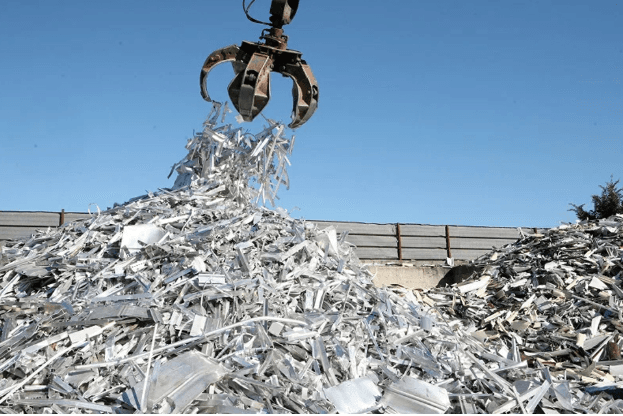
Recycling aluminium fundamentally transforms its environmental footprint. Unlike primary production, which relies on energy-intensive extraction and processing, recycled aluminium is produced through simple remelting, drastically reducing both energy use and emissions.
The benefits are substantial. Recycling can cut energy consumption by up to 95% and reduce CO₂ emissions by 90–95% compared to primary aluminium. At the same time, aluminium retains its properties indefinitely, meaning it can be recycled repeatedly without significant loss in quality.
In effect, every tonne of aluminium scrap used not only conserves resources but also directly replaces the need for high-emission primary production, making it one of the most efficient pathways for industrial decarbonisation.
Why Scrap Matters More Than Ever?
1. Immediate Emission Reduction Lever
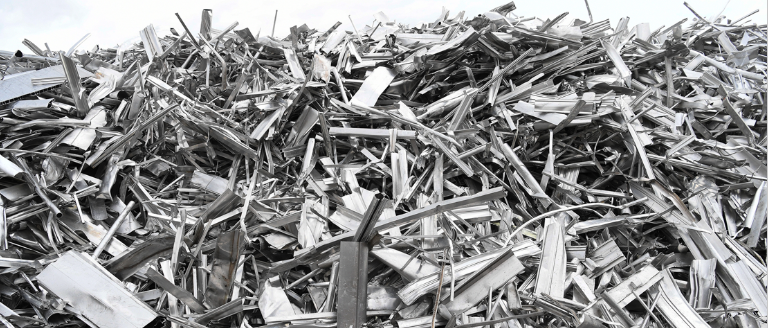
Unlike breakthrough technologies (like green hydrogen), aluminium recycling is already mature and scalable. Increasing scrap usage delivers instant decarbonisation benefits without requiring new infrastructure at scale.
2. Reduces Dependence on Fossil-Based Power
Primary aluminium production is heavily tied to electricity sources. By shifting to scrap, industries reduce their reliance on coal-based grids—especially relevant in countries like India.
3. Enables Circular Economy
Aluminium scrap is a cornerstone of circularity:
- Beverage cans → new cans
- Automotive parts → new vehicles
- Construction materials → new infrastructure
This reduces both emissions and resource extraction pressures.
4. Supports ESG and CBAM Compliance
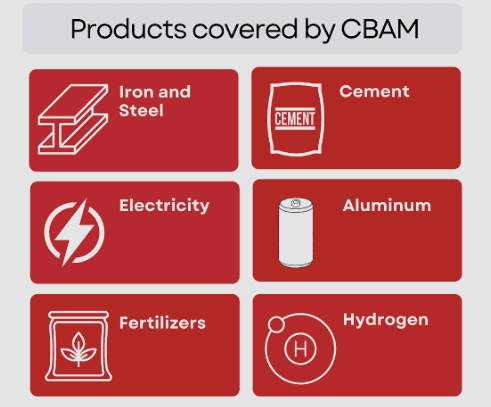
With mechanisms like the EU’s Carbon Border Adjustment Mechanism (CBAM), embedded emissions matter. Companies using more recycled aluminium can:
- Lower their carbon intensity
- Avoid higher carbon costs in exports
- Strengthen ESG disclosures
5. Industrial Competitiveness
Low-carbon aluminium is increasingly demanded by sectors like:
- Automotive (EV manufacturers)
- Construction
- Consumer goods
Scrap-based aluminium provides a cost-effective pathway to meet this demand.
Primary vs Recycled Aluminium: The Emissions Gap
The contrast between primary and recycled aluminium production highlights one of the most striking decarbonisation opportunities in the industrial sector. While primary aluminium relies on energy-intensive, multi-stage processes starting from raw material extraction, recycled aluminium bypasses these steps entirely through simple remelting. This results in dramatically lower energy use, reduced emissions, and a far more resource-efficient production pathway. The scale of this difference underscores why increasing scrap utilisation is central to reducing the carbon footprint of aluminium. Every tonne of scrap used can avoid up to 14–15 tonnes of CO₂ emissions.
| Parameter | Primary Aluminium | Recycled Aluminium |
| Energy consumption | Very high | ~95% lower |
| Emissions (tCO₂/t aluminium) | 12–16 | 0.5–1.5 |
| Raw material requirement | Bauxite mining | Scrap metal |
| Process complexity | Multi-stage | Simple remelting |
Table 1: Primary vs Recycled Aluminium
Where Emissions Come From (Primary Aluminium)
The carbon intensity of primary aluminium is not driven by a single stage, but by emissions accumulated across the entire production chain, from mining to final processing. Each step contributes through different sources, including fuel combustion, process heat, and electricity use. However, the most significant share of emissions arises during the smelting stage, where electricity-intensive electrolysis dominates the process. Understanding this breakdown is critical, as it highlights where decarbonisation efforts, such as cleaner power or increased scrap use, can have the greatest impact. Nearly 70–80% of emissions come from electricity-intensive smelting.
| Stage | Process Description | Emission Source |
| Bauxite Mining | Extraction of ore | Diesel use, land-use change |
| Alumina Refining | Bayer process | Heat (coal/gas), chemicals |
| Electrolysis (Smelting) | Hall-Héroult process | Electricity, carbon anodes |
| Casting & Finishing | Product shaping | Fuel and electricity |
Table 2: Major Emission Contribution
| Production Route | Energy Use | Emissions (tCO₂/t Al) | Reduction Potential |
| Primary Aluminium | Very High | 12–16 | — |
| Recycled Aluminium | Very Low | 0.5–1.5 | 90–95% lower |
Table 3: Emission Impact Comparison
The Indian Context: Untapped Potential
India’s aluminium demand is rising rapidly, driven by infrastructure growth, urbanisation, and expanding manufacturing sectors. However, despite this increasing demand, the utilisation of aluminium scrap remains relatively low compared to global leaders. This gap is largely due to structural challenges such as fragmented and informal scrap collection systems, limited segregation and processing infrastructure, and inconsistencies in scrap quality.
At the same time, this gap presents a significant opportunity. Formalising the scrap ecosystem can unlock substantial emission reductions while improving material efficiency. The concept of urban mining, recovering metals from end-of-life products and waste streams, offers a pathway to reduce import dependence and strengthen resource security. With the right policy support, including recycling targets, incentives, and better regulatory frameworks, India can accelerate the transition toward a more circular and low-carbon aluminium economy.
Beyond Recycling: Strategic Integration
To unlock the full decarbonisation potential of aluminium scrap, industries must move beyond basic recycling and adopt a more integrated, system-level approach. This includes developing closed-loop manufacturing systems, where scrap generated during production is directly reused within the same process, minimising waste and emissions. Equally important is designing products for recyclability, ensuring that materials can be easily recovered and reprocessed at the end of their lifecycle.
In parallel, traceability systems, enabled by digital tools, are becoming critical for tracking scrap flows and supporting transparent ESG reporting. Industries can also adopt blending strategies, optimising the mix of primary and recycled aluminium to balance quality requirements with emissions reduction goals. Together, these approaches shift recycling from a downstream activity to a core element of industrial strategy.
Conclusion
Aluminium scrap is not merely a sustainability add-on, it is a central pillar of industrial decarbonisation. At a time when industries are seeking solutions that are both scalable and economically viable, recycling stands out for its immediate impact and proven feasibility.
For countries like India, the question is no longer whether aluminium recycling should be scaled, but how quickly it can be accelerated. In the transition to a low-carbon economy, the most sustainable tonne of aluminium is not newly produced, it is the one that has already been made and can be used again.