
The Shift from Reporting to Verifiable Carbon Intelligence
In today’s carbon-constrained economy, the conversation around emissions has evolved from what companies report to how reliably they can prove it. As climate regulations tighten and mechanisms such as carbon pricing and border adjustment measures gain momentum, emissions data is no longer just a compliance requirement, it is becoming a strategic asset. What stakeholders increasingly demand is not only accuracy, but traceability: the ability to track emissions data across its lifecycle, from primary data capture to final disclosure, with a transparent and auditable trail.
Historically, emissions accounting under the GHG Protocol relied on periodic reporting, spreadsheets, and generalized emission factors. While this created a globally standardised framework, it often lacked the granularity and verification rigor required in today’s compliance-heavy environment. This model is now giving way to continuous carbon intelligence, where organizations adopt real-time or near real-time monitoring systems that embed emissions tracking into everyday operations.
This transformation is also being accelerated by evolving disclosure frameworks such as the International Sustainability Standards Board (ISSB) standards and the European Union’s Corporate Sustainability Reporting Directive (CSRD), both of which emphasise consistency, transparency, and audit-ready disclosures. As a result, emissions reporting is transitioning from a backward-looking exercise to a forward-looking, decision-enabling system.
Digital Infrastructure: Operationalising the GHG Protocol
The GHG Protocol, developed by the World Resources Institute (WRI) and the World Business Council for Sustainable Development (WBCSD), provides a robust methodology for categorising emissions into Scope 1, Scope 2, and Scope 3. However, it stops short of defining how organizations should operationalize these calculations in real time. This gap is increasingly being filled by digital technologies that enable end-to-end traceability.
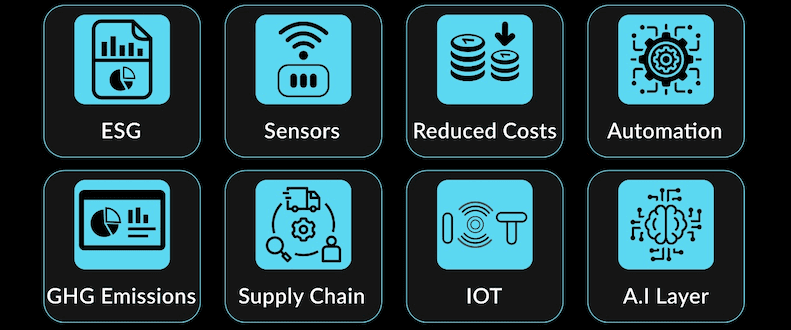
Modern systems integrate IoT sensors, enterprise resource planning (ERP) platforms, advanced analytics, and cloud-based data architectures to capture emissions-related data continuously. In some cases, blockchain technologies are also being explored to create immutable audit trails. Together, these technologies create what can be understood as a “digital backbone” for carbon accounting, one that ensures data integrity, traceability, and reproducibility.
This alignment does more than enhance compliance with the GHG Protocol’s principles of completeness, consistency, transparency, and accuracy. It transforms the framework into a living system, where emissions data is continuously validated, updated, and contextualised.
Unlocking Cost and Energy Optimisation
One of the most immediate benefits of technology traceability is its impact on cost and energy optimisation. When emissions data is captured at a granular level, inefficiencies that were previously hidden become visible. Organisations can identify energy losses, detect underperforming equipment, and optimise operational schedules to reduce unnecessary consumption.
For instance, real-time monitoring of electricity usage can highlight peak demand periods that drive up costs, allowing firms to adjust operations accordingly. Similarly, fuel consumption tracking can reveal inefficiencies in combustion processes, enabling targeted interventions.
The International Energy Agency (IEA) estimates that energy efficiency improvements could deliver more than 40 percent of the emissions reductions needed globally while simultaneously lowering operational costs. Traceability technologies make these efficiency gains actionable by pinpointing exactly where interventions are needed.
Beyond cost savings, this also enhances energy resilience. As energy markets become more volatile, the ability to optimise consumption and integrate renewable energy sources such as through demand response or on-site generation becomes a critical competitive advantage.
Transforming Strategic Planning and Capital Allocation
The value of traceable emissions data extends far beyond operational efficiency. It fundamentally reshapes how organizations make strategic decisions. Climate commitments, including net-zero targets and science-based pathways, require long-term investments in technologies such as electrification, hydrogen, and carbon capture.
Without reliable data, these decisions are often based on assumptions or industry averages. Traceability systems, however, enable companies to develop precise emissions baselines, conduct scenario analyses, and evaluate the cost-effectiveness of various decarbonisation options. This allows organizations to move from reactive compliance to proactive planning.
Such data-driven decision-making aligns closely with the Science Based Targets initiative (SBTi), which emphasises the importance of robust data systems in setting credible and achievable emissions reduction targets. In this context, traceability becomes not just a reporting tool, but a foundation for strategic transformation.
Reinventing Scope 3 and Value Chain Transparency
Scope 3 emissions, which often constitute the majority of a company’s carbon footprint, have historically been the most challenging to measure. Due to the complexity of supply chains, organizations have relied heavily on secondary data and industry averages.
Digital traceability is beginning to change this paradigm by enabling supplier-level data collection, digital product tracking, and lifecycle emissions analysis. These capabilities are particularly critical in sectors such as steel, cement, automotive, and pharmaceuticals, where supply chain emissions dominate.
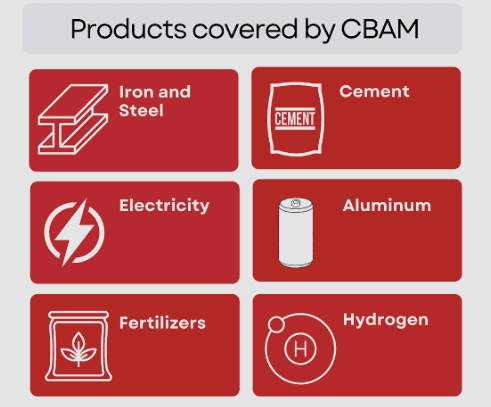
This shift is also being driven by regulatory developments such as the European Union’s Carbon Border Adjustment Mechanism (CBAM), which requires exporters to provide detailed and verifiable emissions data. Companies that invest in traceability systems are therefore better positioned to maintain market access, while those that rely on estimates may face increasing compliance risks.
Enhancing Auditability, Transparency and Investor Confidence
Another critical advantage of technology traceability lies in its ability to enhance auditability and transparency. Digital systems create detailed records of data inputs, calculation methodologies, and revisions, making it easier to verify emissions disclosures.
This significantly reduces the time and cost associated with third-party verification while increasing confidence among regulators, investors, and other stakeholders. As highlighted by the Intergovernmental Panel on Climate Change (IPCC), transparency and accuracy in emissions data are essential for effective climate action.
For investors, traceable emissions data reduces ESG-related risks and strengthens the credibility of corporate climate commitments. In an environment where greenwashing is under increasing scrutiny, traceability serves as a critical safeguard.
Challenges and the Path Forward
Despite its clear advantages, the transition to technology-enabled traceability is not without challenges. Organizations must navigate issues related to data integration across legacy systems, upfront investment costs, and the need for specialized skills in data analytics and carbon accounting.
However, the rapid development of digital MRV (Monitoring, Reporting, and Verification) platforms and sector-specific solutions is helping to address these barriers. As adoption scales, costs are expected to decline, and best practices will become more standardized.
Looking ahead, the future of carbon management will likely be defined by deeper integration between financial and non-financial data systems, enabling organizations to treat carbon emissions with the same rigor as financial metrics.
Conclusion
The alignment between technology traceability and the GHG Protocol represents a fundamental shift in how organizations approach climate action. What was once a compliance-driven exercise is now becoming a source of operational efficiency, strategic insight, and competitive advantage.
In a world where carbon is increasingly priced, regulated, and scrutinized, the ability to trace emissions data with precision is no longer optional, it is foundational. Technology traceability does more than support the GHG Protocol; it brings it to life, transforming it from a static framework into a dynamic system that drives measurable impact.
References
- World Resources Institute (WRI) & World Business Council for Sustainable Development (WBCSD). GHG Protocol Corporate Accounting and Reporting Standard
- International Energy Agency (IEA). (2023). Energy Efficiency Market Report
- Intergovernmental Panel on Climate Change (IPCC). (2023). AR6 Synthesis Report
- Science Based Targets initiative (SBTi). Corporate Net-Zero Standard
- European Commission. Carbon Border Adjustment Mechanism (CBAM) Guidance Documents
- International Sustainability Standards Board (ISSB). IFRS S2 Climate-related Disclosures
- European Commission. Corporate Sustainability Reporting Directive (CSRD)
- International Renewable Energy Agency (IRENA). (2023). Digitalisation and Energy Transition
- World Economic Forum. (2023). Digital Carbon Accounting and Traceability
- McKinsey & Company. (2022). The Future of Carbon Accounting
- CDP (2023). Global Supply Chain Report