
The chemicals industry is often described as the “industry of industries”, a foundational sector that underpins everything from agriculture and construction to pharmaceuticals and consumer goods. Yet, behind this central role lies a less visible reality: chemical production is one of the most emissions-intensive industrial activities globally.
Unlike sectors where emissions are largely tied to energy use, the chemicals industry faces a dual challenge it is both energy-intensive and carbon-embedded at a molecular level. This raises a critical question: what exactly makes chemical production so emission-heavy?
As global demand for chemicals continues to rise, driven by urbanisation, agriculture, and consumer goods the sector’s emissions are expected to grow unless structural changes are made. This makes understanding its emission profile not just an academic exercise, but a critical step toward meaningful climate action.
The Dual Nature of Emissions: Energy and Feedstocks
At its core, chemical production relies heavily on fossil fuels, not just as an energy source, but as a raw material (feedstock). This fundamentally differentiates it from many other sectors.
In processes like steam cracking or ammonia synthesis, hydrocarbons are chemically transformed into new products. This means carbon is not just burned for energy, it is structurally embedded in the final product, making emissions far more difficult to eliminate.
| Emission Source | Role in Chemical Production | Impact on Emissions |
| Fossil fuels (coal, oil, gas) | Energy + feedstock | Very high |
| Electricity | Process operations | Moderate–high |
| Process emissions | Chemical reactions | High |
This dual dependency creates a structural lock-in. Even if the industry transitions to renewable energy, emissions from feedstocks may still persist unless alternative raw materials are adopted.
In practical terms, this means decarbonization cannot rely on energy transition alone. It requires a fundamental rethink of raw materials, shifting toward bio-based inputs, recycled carbon streams, or synthetic feedstocks, each of which comes with its own technical and economic challenges.
Scope 1, 2, and 3
To understand the full picture, it is essential to look beyond factory gates. Scope 1 emissions are particularly significant in chemicals due to high-temperature processes and direct chemical transformations. However, much like pharmaceuticals, Scope 3 emissions often dominate, especially when considering downstream product use and disposal.
For example, plastics derived from petrochemicals may release emissions at end-of-life through incineration or degradation, extending the carbon footprint far beyond production. This makes lifecycle accounting essential but also highly complex. This lifecycle perspective reveals an important insight: the true climate impact of chemicals often materialises outside the factory boundary. As a result, companies are increasingly being pushed toward value chain accountability, where emissions from suppliers and product use are no longer optional disclosures but central to ESG performance.
| Emission Scope | Key Sources in Chemicals | Relative Contribution |
| Scope 1 (Direct) | Fuel combustion, process emissions (e.g., cracking, reforming) | Very high |
| Scope 2 (Indirect energy) | Purchased electricity for operations | Moderate |
| Scope 3 (Value chain) | Feedstock extraction, product use (e.g., plastics), end-of-life disposal | Dominant |
High-Temperature Processes and Energy Intensity
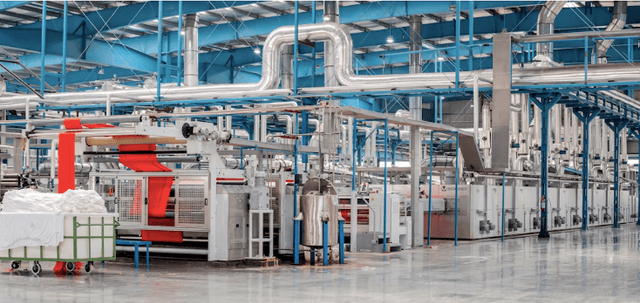
Many chemical processes require extreme temperatures and pressures, often exceeding 800–1000°C. These conditions are necessary to break molecular bonds and drive reactions efficiently.
This results in continuous, energy-intensive operations that run for extended periods with minimal downtime. To sustain such demanding conditions, facilities rely heavily on fossil-based heat sources such as coal and natural gas, which further drive emissions. At the same time, the potential for electrification remains limited for several processes, as current technologies struggle to deliver the extremely high temperatures and reliability required at scale.
Unlike intermittent industrial processes, chemical plants are designed for continuous production, often operating 24/7 to maintain efficiency and product consistency. This makes sudden shifts to alternative energy sources more complex, as even minor disruptions can impact product quality and safety. Consequently, the sector remains heavily dependent on stable, high-energy-density fuels.
| Process | Energy Requirement | Emission Intensity Insight |
| Steam Cracking | Very high (800–900°C) | One of the largest emitters |
| Ammonia Production (Haber-Bosch) | High pressure + temperature | Significant CO₂ from hydrogen production |
| Methanol Production | Fossil-based feedstock | High process emissions |
Electrification of heat is emerging as a solution, but technological and economic barriers remain significant, particularly for retrofitting existing plants designed around fossil fuels.
In many cases, retrofitting is not just costly but technically constrained, as existing infrastructure is optimized for fossil-based systems. This creates long transition timelines and reinforces the need for breakthrough innovations rather than incremental improvements.
Complex Value Chains and Embedded Carbon
The chemicals sector operates within deeply interconnected and global value chains. A single product may pass through multiple stages, each adding emissions.
- Upstream: extraction of fossil feedstocks
- Midstream: processing and conversion
- Downstream: product use (plastics, fertilizers, solvents)
Fertilisers, for instance, release nitrous oxide (N₂O), a greenhouse gas far more potent than CO₂ during application in agriculture. This means emissions linked to chemicals often occur outside industrial boundaries, complicating accountability. The result is a system where carbon is embedded not just in production, but across entire economic systems.
This interconnectedness also means that decarbonizing chemicals has ripple effects across multiple sectors, from agriculture to automotive to packaging, making it both a challenge and an opportunity for system-wide transformation.
Why Decarbonising Chemicals Is So Difficult
Transitioning the chemicals industry to low-carbon pathways is uniquely challenging due to:
- Feedstock dependency: Fossil fuels are integral to product composition
- Process constraints: High temperature and pressure requirements
- Capital intensity: Long lifespans of industrial assets
- Limited alternatives: Bio-based or recycled inputs are not yet scalable
Additionally, shifting to alternatives like green hydrogen or bio-feedstocks introduces trade-offs related to cost, land use, and infrastructure, highlighting that decarbonisation is not just a technical challenge, but a systemic one. There is also a timing challenge i.e. industrial assets in the chemicals sector often operate for decades. Decisions made today will lock in emission trajectories for years, making early and strategic intervention critical.
Way forward
Despite significant structural and technological barriers, momentum is building around a set of emerging solutions aimed at decarbonizing the chemicals industry. These include the use of green hydrogen for producing ammonia and methanol, Carbon Capture, Utilization, and Storage (CCUS) to address process emissions, electrification of heat systems, and circular economy approaches such as recycling and material reuse.
Each of these pathways offers meaningful potential, but none are without limitations. Green hydrogen, for instance, can eliminate fossil-based inputs but remains costly and infrastructure-intensive. CCUS can reduce emissions from existing processes, yet it is energy-intensive and still evolving at scale. Similarly, recycling and bio-based feedstocks can lower lifecycle emissions, but challenges around quality, scalability, and resource constraints persist.
| Solution | Potential Impact | Limitations |
| Green hydrogen | Eliminates fossil-based hydrogen | High cost, infrastructure needs |
| CCUS | Reduces process emissions | Energy-intensive, expensive |
| Recycling (mechanical/chemical) | Reduces virgin feedstock demand | Quality and scalability issues |
| Bio-based feedstocks | Lower lifecycle emissions | Land and resource constraints |
What emerges clearly is that no single solution will be sufficient. Decarbonising the chemicals sector will require a portfolio approach, combining technological innovation, supportive policy frameworks, and shifts in market demand. Equally important is collaboration, across industries, governments, and financial institutions, to scale these solutions, particularly in emerging economies where chemical demand is accelerating.
At its core, the emissions intensity of chemical production stems from a combination of energy-intensive processes, fossil-based feedstocks, and deeply embedded lifecycle emissions. Addressing this challenge therefore goes beyond incremental efficiency improvements. It requires a fundamental rethinking of how chemicals are designed, produced, and consumed.
As regulatory pressure intensifies and ESG expectations become more stringent, the chemicals industry stands at a critical inflection point. Achieving net zero will not be a matter of optimization alone, it will demand systemic transformation. In many ways, this sector represents the ultimate test of industrial decarbonization: if chemicals can transition, it will set a precedent for the broader global economy.