
Why Aluminium Scrap Matters for Emissions
Aluminium plays an important role in transport, buildings, renewable energy systems, electrical infrastructure, packaging and consumer products. Its combination of low weight, durability and recyclability makes it valuable for a low-carbon economy.
However, producing primary aluminium from mined raw materials requires significant amounts of energy. Its carbon footprint can vary considerably depending on the source of electricity, refining fuel, smelting efficiency, anode performance and the emissions boundary used in the calculation.
Increasing the use of aluminium scrap can substantially reduce the energy and emissions associated with production. Scrap is therefore more than a waste-management issue: it is an important industrial resource and a practical component of aluminium-sector decarbonisation.
Why Primary Aluminium Is Emissions-Intensive
Primary aluminium production involves several stages:
Mining bauxite ore
Refining bauxite into alumina through the Bayer process
Converting alumina into aluminium through Hall-Héroult electrolysis
Casting and finishing the aluminium into usable forms
Emissions arise throughout this chain.
Bauxite mining consumes diesel and can affect land use. Alumina refining requires process heat, which may be supplied by coal, gas or other fuels. Aluminium smelting requires large quantities of electricity. Carbon anodes used during electrolysis also produce direct process emissions.
The electricity source is particularly important. Aluminium produced using a carbon-intensive power grid can have a substantially higher footprint than aluminium produced using low-carbon electricity.
According to the International Aluminium Institute, cradle-to-gate carbon footprints for primary aluminium commonly fall within a broad range of approximately 4.5 to 22 tonnes of CO₂ equivalent per tonne of aluminium. The result depends on the production route, electricity mix, technology, geography and accounting methodology.
This wide range is why a single global emissions factor should not be applied to every aluminium producer.
How Recycling Changes the Emissions Profile
Recycled aluminium avoids several emissions-intensive stages required for primary production. It does not require new bauxite mining, alumina refining or electrolytic smelting.
However, recycling is not simply a matter of melting scrap. A functioning recycling system can include:
Scrap collection
Sorting by alloy and contamination level
Shredding or dismantling
Coating and oil removal
Separation of metals and other materials
Remelting
Removal of impurities
Alloy adjustment
Casting and finishing
These activities still require energy and produce emissions. Material can also be lost through oxidation, contamination and processing inefficiencies. Nevertheless, a well-managed recycling route generally requires substantially less energy than primary aluminium production.
The International Aluminium Institute reports that, using its stated 2019 system boundaries, primary aluminium required approximately 186 gigajoules per tonne, compared with approximately 8.3 gigajoules per tonne for recycled aluminium. This represents an energy saving of about 95%.
The comparison should be interpreted carefully. The primary figure uses a mine-to-casthouse boundary, while the recycling figure covers the recycling process from scrap input. The embodied impacts associated with the aluminium before it became scrap are generally not reassigned to the recycled product under this comparison.
Source: International Aluminium Institute – Aluminium recycling and energy savings
Primary and Recycled Aluminium Compared
Parameter | Primary aluminium | Recycled aluminium |
Principal material input | Bauxite and alumina | Pre-consumer or post-consumer aluminium scrap |
Main production stages | Mining, refining, electrolysis and casting | Collection, sorting, preparation, remelting and casting |
Indicative energy requirement | Approximately 186 GJ/t under the cited IAI 2019 boundary | Approximately 8.3 GJ/t under the cited IAI 2019 boundary |
Typical emissions profile | Highly dependent on electricity, refining fuel and process performance | Usually substantially below primary production, but dependent on scrap processing, yield and furnace energy |
Important operational risks | Electricity carbon intensity, anode emissions, refining energy and process efficiency | Contamination, alloy mixing, oxidation losses, poor sorting and uncertain scrap origin |
Main improvement opportunities | Low-carbon electricity, inert anodes, efficient refining and process optimisation | Better collection, alloy sorting, closed-loop recovery, cleaner furnace energy and improved yield |
Table 1: Indicative comparison of primary and recycled aluminium. Figures should not be treated as universal product-level emission factors. Organisational and product reporting should use verified, facility-specific data wherever available.
Why Aluminium Scrap Is Strategically Important
1. It provides an available emissions-reduction pathway
Some industrial decarbonisation technologies remain under development or require major changes to existing facilities. Aluminium recycling is already commercially established.
Increasing scrap utilisation can therefore contribute to emissions reduction in the near term. The achievable reduction depends on scrap availability, alloy requirements, processing losses and the primary aluminium route being displaced.
Recycling should not be described as “zero-carbon”. Collection, transport, sorting, remelting and casting still consume energy. Its advantage is that it can avoid the particularly energy-intensive refining and electrolysis stages of primary production.
2. It reduces exposure to electricity-intensive primary production
Electricity is a major contributor to the footprint of primary aluminium. This is especially significant where smelters rely on carbon-intensive power.
Using more suitable scrap can reduce the quantity of primary aluminium required for a given level of finished production. This can lower exposure to both the emissions and energy costs associated with primary smelting.
The benefit should be calculated using an appropriate lifecycle boundary rather than assuming that every tonne of scrap creates the same avoided emissions.
3. It supports material circularity
Aluminium can be recycled repeatedly, but successful circularity depends on retaining material quality.
Examples of potential circular flows include:
Used beverage cans becoming new can sheet
Automotive production scrap returning to automotive alloy production
End-of-life vehicle aluminium entering new automotive or other suitable applications
Construction components being recovered for secondary aluminium production
Manufacturing offcuts returning directly to the supplier or casting facility
Closed-loop recycling generally preserves more value because the scrap composition is known and can be returned to a compatible application.
Open-loop recycling can also be useful, but mixed alloys may need additional processing or may be suitable only for products with less demanding composition requirements.
4. It can reduce raw-material dependence
Greater recovery of domestic aluminium scrap can reduce dependence on newly mined material and imported metal. It can also improve material security for manufacturers exposed to commodity-market volatility or supply-chain disruption.
Capturing this value requires more than recycling capacity. It also requires effective collection systems, formal scrap markets, material segregation and reliable information about alloy composition and origin.
5. It supports demand for lower-carbon materials
Automotive, construction, packaging, electrical equipment and consumer-goods companies are increasingly examining the embedded emissions of purchased materials.
Higher recycled content can contribute to a lower product carbon footprint, provided the claim is supported by a consistent accounting methodology and reliable evidence.
A credible claim should specify:
Whether the material is pre-consumer or post-consumer scrap
The percentage of recycled content
The accounting and allocation methodology
The production facility and reporting period
The energy used for scrap processing and remelting
Material and process losses
Whether the result has been independently verified
Statements such as “green aluminium” or “zero-carbon aluminium” should be avoided unless they are supported by clearly defined criteria and verifiable data.
Scrap Quality and Alloy Management
Not every type of aluminium scrap can replace every type of primary aluminium.
Aluminium products contain different alloys designed for particular mechanical, chemical and manufacturing requirements. Mixing incompatible alloys can introduce unwanted elements that are difficult or expensive to remove.
For example, aluminium used in a building façade may have a different composition from aluminium used in an engine component or beverage can. If these materials are mixed without adequate sorting, the resulting metal may not meet the specification required for its original application.
Effective recycling therefore depends on:
Separating scrap by alloy family
Preventing contamination with steel, plastics and other materials
Identifying coatings, oils and attachments
Measuring chemical composition
Monitoring recovery and melt losses
Matching recovered metal with suitable product specifications
Digital material records, sensor-based sorting and stronger supplier data can help improve scrap utilisation while protecting product quality.
Understanding the Sources of Primary Aluminium Emissions
Production stage | Principal activity | Main potential emission sources |
Bauxite mining | Extraction and preparation of ore | Diesel, electricity, land disturbance and transport |
Alumina refining | Conversion of bauxite into alumina | Process heat, steam, electricity and chemicals |
Aluminium smelting | Electrolytic conversion of alumina into aluminium | Electricity, carbon anodes and perfluorocarbon emissions during process disturbances |
Casting | Conversion of molten aluminium into usable forms | Furnace fuel, electricity, alloying and metal loss |
Transport | Movement of ore, alumina, metal and scrap | Marine fuel, road transport and rail energy |
Table 2: Major sources of emissions across the primary aluminium value chain.
The relative contribution of each stage varies between producers. In a smelter supplied by carbon-intensive electricity, power consumption may dominate the footprint. Where electricity is low-carbon, refining heat, anode consumption and other process emissions can become proportionally more important.
The Indian Context
India has a large and expanding market for aluminium in infrastructure, transport, electrical equipment, packaging and manufacturing. This creates both a growing material requirement and an increasing volume of recoverable aluminium at the end of product life.
Improving aluminium circularity in India requires attention to several practical challenges:
Fragmented collection and trading networks
Mixing of alloys and scrap grades
Limited segregation at the point of disposal
Inconsistent information about material origin
Contamination and variable scrap quality
Gaps between informal collection and formal processing
Limited product-level traceability
The informal sector already plays a significant role in recovering valuable material. A stronger circular system should preserve effective collection activity while improving worker safety, environmental controls, material documentation and integration with formal recyclers.
Urban mining—the recovery of materials from buildings, vehicles, machinery, appliances and other products—can help increase domestic material availability. Its value depends on effective dismantling, separation, logistics and markets for recovered alloys.
Recycled Aluminium, Product Footprints and CBAM
Using recycled aluminium may reduce the embedded emissions of a product, but the result depends on the applicable accounting rules.
For product carbon-footprint reporting, companies should define:
The lifecycle boundary
The allocation method used for scrap
The treatment of pre-consumer and post-consumer material
The electricity and fuel factors applied
Transportation assumptions
Recovery and yield losses
The source of supplier emissions data
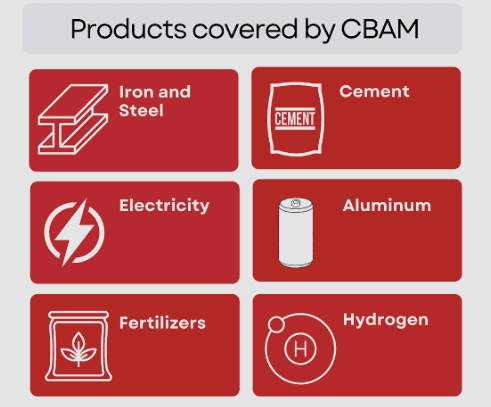
The EU Carbon Border Adjustment Mechanism also applies specific rules for determining embedded emissions. Companies should not assume that adding recycled content will automatically eliminate a CBAM obligation or carbon cost.
The effect will depend on matters including the covered product, production route, reporting period, treatment of scrap and verified emissions data required under the applicable rules.
Companies exporting covered aluminium products to the EU should therefore evaluate recycled content as part of a broader CBAM data and compliance process.
Source: European Commission – Carbon Border Adjustment Mechanism
From Recycling Claims to Verifiable Evidence
To make credible emissions claims, manufacturers need evidence connecting scrap inputs with production outputs.
A practical traceability system should capture:
Data category | Examples |
Scrap identity | Scrap type, alloy family, supplier and country of origin |
Classification | Pre-consumer, post-consumer or internal process scrap |
Quantity | Gross weight, accepted weight and processed weight |
Quality | Composition, contamination and moisture |
Processing | Sorting, preparation, furnace and casting route |
Energy | Electricity, natural gas and other fuels |
Yield | Metal recovered, oxidation loss and waste generated |
Output | Alloy, batch, product and customer allocation |
Emissions | Calculation method, emission factors and verification status |
Table 3: Evidence needed to support recycled-content and emissions claims.
This information helps organisations move beyond general sustainability statements and produce claims that can be reviewed by customers, auditors and regulators.
A Practical Aluminium Decarbonisation Strategy
Increasing scrap use should be part of an integrated strategy rather than an isolated target.
A practical approach can include:
Mapping current scrap generation and procurement
Separating alloys at the point of generation
Establishing closed-loop arrangements with suppliers and customers
Improving scrap-quality specifications
Measuring furnace energy and recovery yield
Introducing batch-level material traceability
Using facility-specific emissions data
Designing products for dismantling and material recovery
Evaluating the appropriate balance between primary and recycled aluminium
Independently verifying material and emissions claims where necessary
Primary aluminium will continue to be required because demand, product life cycles, scrap availability and quality constraints limit how much recycled material can be used. The objective is therefore not to present primary and recycled aluminium as a simple either-or choice.
The practical objective is to use suitable scrap as efficiently as possible while reducing the footprint of the primary aluminium that remains necessary.
Conclusion
Aluminium scrap is an important resource for industrial decarbonisation because recycling can avoid the most energy-intensive stages of primary production.
The size of the benefit is not identical in every case. It depends on the scrap source, alloy quality, recycling technology, energy mix, recovery yield, transport and emissions-accounting methodology.
Companies should therefore avoid unsupported claims about fixed emissions savings. A stronger approach is to combine increased scrap use with alloy segregation, efficient processing, cleaner energy and traceable production data.
When these elements are integrated, aluminium recycling can reduce emissions, improve resource security and support more credible product-level carbon reporting.
References
International Aluminium Institute – Greenhouse-gas savings from aluminium recycling
International Aluminium Institute – Aluminium carbon-footprint FAQs